

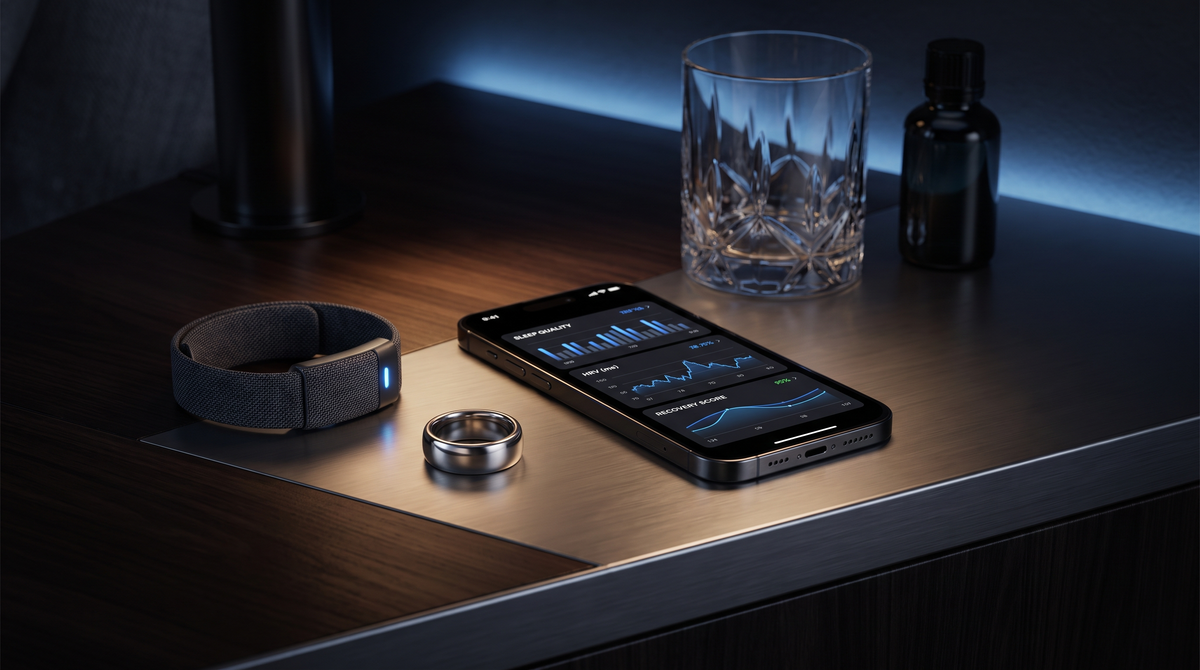
Oura and WHOOP can tell you a lot about how alcohol affects your body, but neither is an alcohol-concentration sensor. They track physiological signals such as heart rate, heart-rate variability (HRV), sleep and recovery, while alcohol is generally added as a tag or Journal behavior. That makes them useful for answering a question like “What did drinking do to my sleep and recovery?” It does not answer “How much alcohol is in my body right now?” Dedicated alcohol-sensing devices solve a different measurement problem.
Editorial disclosure: This article is published by EthyloKey. Oura and WHOOP are independent companies and are not affiliated with EthyloKey.
Key takeaways
- Oura does not directly measure alcohol concentration. Users can tag alcohol and compare it with sleep, HRV, resting heart rate and Readiness-related trends.
- WHOOP does not directly measure alcohol concentration either. Users can log alcohol in the WHOOP Journal and examine associations with Recovery, HRV, resting heart rate and sleep.
- Both platforms are valuable for understanding the physiological aftermath of drinking, especially overnight and the next day.
- Neither Oura nor WHOOP provides an alcohol reading, a BAC value or a direct measurement of ethanol.
- A dedicated alcohol detector answers a different question: whether an alcohol-related signal can be detected at the moment you choose to test.
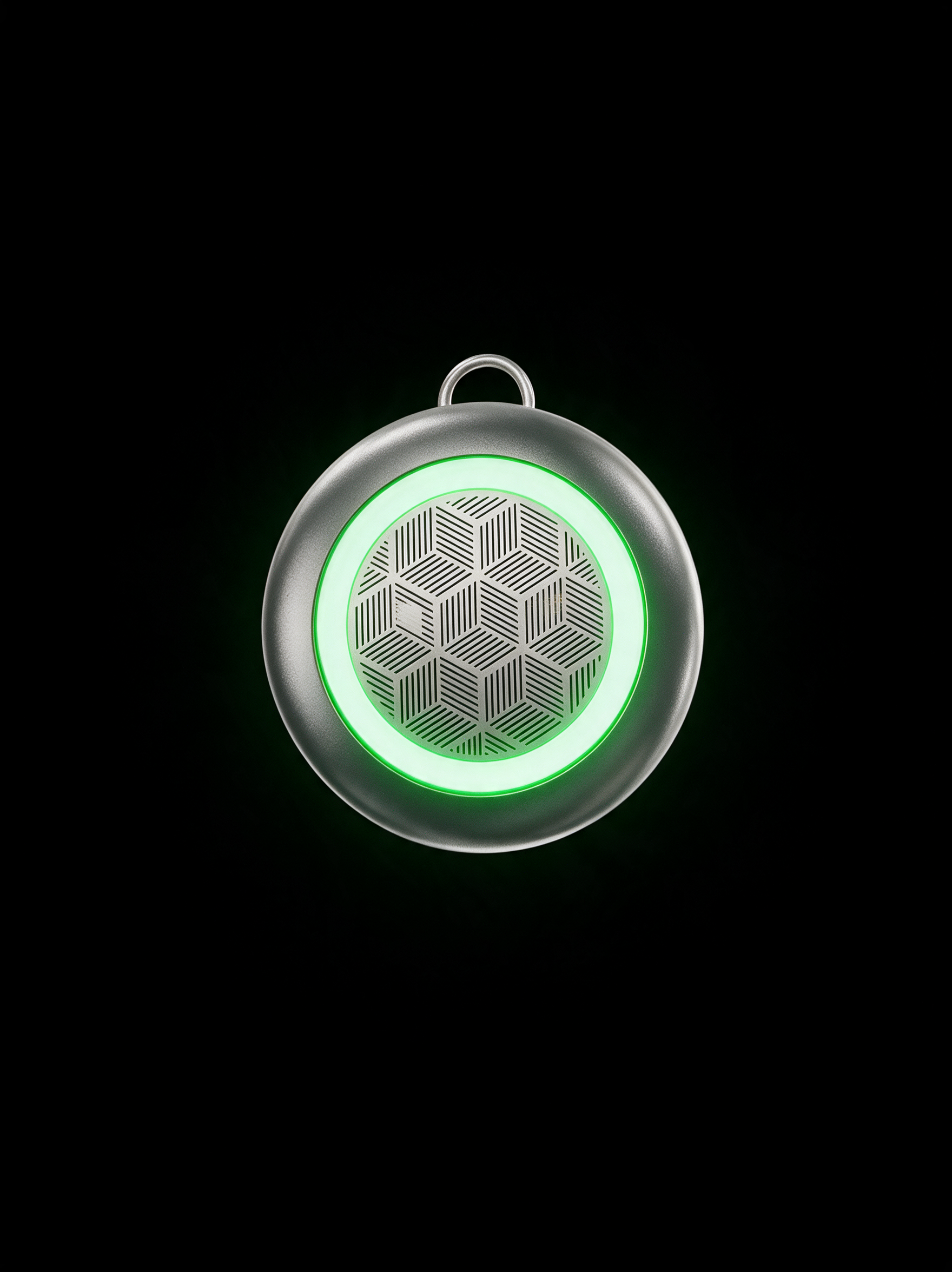
- EthyloKey is an on-demand, touch-based alcohol detector that provides an indicative green, orange or red range rather than an exact BAC value.
Oura vs WHOOP vs an alcohol detector: three different jobs
The easiest way to understand the difference is to separate behavior, physiological response and alcohol-specific sensing.
| Question | Oura | WHOOP | EthyloKey |
|---|---|---|---|
| What kind of device is it? | Continuous smart ring / wellness wearable | Continuous performance and recovery wearable | On-demand touch-based alcohol detector |
| Does it directly detect ethanol? | No | No | Yes, through skin-contact sensing |
| How is alcohol added? | User can apply an alcohol tag | User can log alcohol in the Journal | The device performs an alcohol-sensing test |
| Typical alcohol-related insight | Changes in sleep, HRV, heart rate and readiness-related metrics | Changes in Recovery, HRV, heart rate, sleep and next-day performance metrics | Indicative green / orange / red alcohol range at the time of the test |
| Exact BAC? | No | No | No |
| Best way to think about it | How did my body respond? | How did my body recover? | What alcohol indication do I get right now? |

What Oura can tell you about alcohol
Oura is built around continuous physiological and sleep tracking. Its Readiness system uses metrics including resting heart rate, HRV, body temperature, sleep and activity balance to help users understand how recovered or prepared they appear to be. Alcohol can be added as a tag in the Oura app, allowing users to compare drinking with subsequent changes in their own biometrics. Oura's current documentation lists alcohol among more than 100 searchable tags and explains that tags do not directly change daily scores; they provide context for trends and personal discoveries. See Oura's documentation on using tags and its Discovery Hub documentation.
What Oura's own alcohol data shows
Oura has also published aggregate data comparing nights tagged with alcohol with surrounding nights without an alcohol tag. In an analysis of more than 600,000 members between January and October 2025, Oura reported that alcohol-tagged nights were associated with 34.6 fewer minutes of total sleep on average, 15.26 fewer minutes of REM sleep, a 10.8 ms lower HRV and a 4.35 bpm higher resting heart rate. These are observational member-data associations, not proof that the tag itself caused every difference. The full methodology and results are described in Oura's analysis of alcohol and sleep.
That is precisely where a product like Oura is powerful: it can make the downstream physiological cost of a behavior visible in a way that is difficult to notice from memory or subjective feeling alone.
But the ring is still measuring your body's response. It is not sampling breath, blood or ethanol released through the skin to determine an alcohol concentration.
What WHOOP can tell you about alcohol
WHOOP takes a similar quantified-self approach but organizes much of the experience around Recovery, Strain, Sleep and the WHOOP Journal. The Journal lets members log hundreds of behaviors and see how those behaviors are associated with their physiological data. Alcohol is one of those behaviors. WHOOP explains that, after enough logged “yes” and “no” instances, its impact view can estimate how a behavior is associated with Recovery. See WHOOP's current Journal documentation.
WHOOP's own aggregated member data reports that, when members log alcohol consumption, HRV is lower, resting heart rate is higher and Recovery is lower on average. A 2026 WHOOP article reports an average 7 ms drop in HRV, a 3 bpm increase in resting heart rate and an 8% lower Recovery when members report consuming alcohol. These are platform-level associations and should not be treated as a personalized prediction for every individual. See WHOOP's alcohol, HRV, sleep and Recovery analysis.
There is also peer-reviewed real-world wearable evidence
A 2026 study in PLOS Digital Health analyzed 5,109,185 person-days from 20,968 participants using wearable and behavioral data. Acute alcohol consumption was associated with dose-dependent increases in nocturnal resting heart rate, reductions in HRV, shorter sleep duration and lower next-day physical activity. Some of the study authors were affiliated with WHOOP, so that relationship is relevant when interpreting the work, but the paper itself was peer-reviewed and provides unusually large-scale real-world evidence. See the PLOS Digital Health study.

What the independent sleep literature says
The alcohol-and-recovery signal seen in wearables is also consistent with controlled sleep research. A 2025 systematic review and meta-analysis in Sleep Medicine Reviews combined 27 studies and found that alcohol altered sleep architecture, including delayed REM onset and reduced REM duration. The authors reported REM disruption even at relatively low doses, with greater disruption as dose increased. See the systematic review and meta-analysis on alcohol and subsequent sleep.
That does not mean a wearable can tell you how much alcohol is circulating in your body. It means the physiological consequences of drinking are often measurable in the signals wearables already track.
The missing distinction: alcohol exposure vs alcohol response
This is the distinction that matters most for Oura and WHOOP users.
Suppose you go out for dinner, have drinks, sleep with your wearable on and wake up to a lower recovery or readiness score. The wearable can help you connect the behavior with what happened to your sleep and cardiovascular signals. That is valuable information.
But it is retrospective and indirect. A lower HRV can have many causes. A higher resting heart rate can have many causes. Poor sleep can have many causes. Alcohol may be the explanation when you logged it, but those metrics are not specific ethanol measurements.
An alcohol-specific detector works in the opposite direction: it is designed to look for an alcohol-related signal rather than infer the effects of drinking from broader physiological changes.
A useful three-layer model
- Behavior layer: What did I do? Oura tags and the WHOOP Journal are strong examples.
- Response layer: How did my body respond? Sleep, HRV, resting heart rate, temperature trends and recovery metrics help answer this.
- Alcohol-sensing layer: Can an alcohol-specific signal be detected now? This requires a device designed to sense alcohol rather than a general wellness wearable.
For quantified-self users, these layers are complementary rather than competing. One helps explain behavior, another shows physiological consequences, and a dedicated sensor can add a point-in-time alcohol indication.
Can Oura or WHOOP tell you your BAC?
No. Neither Oura nor WHOOP is designed to provide a BAC measurement. Their current alcohol features are based on logging or tagging a behavior and examining its relationship with physiological metrics.
That distinction is important because BAC, breath alcohol and transdermal alcohol are different measurement domains. Even devices specifically designed to detect alcohol do not all produce the same kind of result.
If you want the underlying science behind skin-based alcohol sensing, read our guide to how transdermal alcohol detection works.
Can Oura or WHOOP tell you when it is safe to drive?
No. A Readiness score, Recovery score, HRV value or sleep score should not be interpreted as evidence that alcohol has cleared your body or that you are fit to drive.
The same safety principle applies to personal alcohol-awareness devices: consumer readings should not be treated as legal clearance. Always follow local laws and never drive if in doubt.
Where EthyloKey fits for Oura and WHOOP users
EthyloKey is designed for a different moment in the self-tracking journey. Instead of continuously monitoring sleep or recovery, it performs an intentional, on-demand alcohol check through fingertip contact.
When a user touches the sensor, EthyloKey detects ethanol released through the skin while also measuring temperature and humidity. A proprietary classification model interprets those signals and provides an indicative green, orange or red alcohol range in approximately 20–25 seconds.
It does not display an exact BAC value. It is not a continuous wearable and it does not replace Oura, WHOOP, a certified breath test or any evidential device.
For someone already using Oura or WHOOP, the most interesting use case is therefore not “Which one should I replace?” It is “Which question am I trying to answer?”
- Use your wearable to understand how alcohol affected your sleep, HRV and recovery.
- Use logged behaviors to identify patterns across many nights and weeks.
- Use a dedicated alcohol-sensing device when you want an alcohol-specific point-in-time indication.

You can see the interaction in more detail on How EthyloKey Works or explore EthyloKey.
Is Oura or WHOOP better for tracking alcohol?
There is no universal winner because the two platforms organize their insights differently.
Oura is particularly centered on sleep, Readiness and long-term trends from a smart ring. Its tagging system lets users connect habits such as alcohol with changes in sleep and readiness-related metrics.
WHOOP is heavily oriented around Recovery, Strain and behavior analysis through the Journal. It has also published extensive member-level alcohol analyses and recent peer-reviewed work using large-scale wearable datasets.
If alcohol awareness is your main objective, the better question is not simply which wearable has the stronger alcohol feature. It is whether you want to understand downstream recovery effects, directly check for an alcohol-related signal, or do both.
Frequently asked questions
Does Oura detect alcohol?
Oura can help users track the effects associated with alcohol by adding an alcohol tag and comparing it with sleep, HRV, heart rate and related trends. It does not directly detect ethanol concentration.
Does WHOOP detect alcohol?
WHOOP allows users to log alcohol in the Journal and analyze associations with Recovery, HRV, heart rate and sleep. It does not directly measure alcohol concentration.
Can Oura or WHOOP show BAC?
No. Their alcohol-related features are based on physiological tracking plus behavior logging, not direct BAC measurement.
Why does alcohol lower recovery scores?
Alcohol can alter autonomic cardiovascular regulation and sleep architecture. Studies and large wearable datasets commonly show higher resting heart rate, lower HRV and disrupted sleep after drinking, although individual responses vary.
Is a lower HRV proof that I still have alcohol in my body?
No. HRV is influenced by many factors including training load, illness, stress, sleep, hydration and alcohol. It is not a specific ethanol measurement.
Can EthyloKey replace Oura or WHOOP?
No. They solve different problems. Oura and WHOOP are continuous wellness and recovery wearables; EthyloKey is an on-demand alcohol-awareness device.
Does EthyloKey provide an exact BAC?
No. EthyloKey provides a color-coded indicative green, orange or red alcohol range. It is a personal wellness and prevention device, not a legal or evidential alcohol test.
The bottom line
Oura and WHOOP have made one thing increasingly visible: alcohol can leave a measurable footprint on sleep, HRV, resting heart rate and recovery long after the last drink.
But they measure the footprint, not the alcohol concentration itself.
For quantified-self users, that creates a useful distinction. Wearables can show how your body responded. A dedicated alcohol detector can add an alcohol-specific check. Together, those are different layers of information — and understanding the difference matters more than trying to make one device do every job.
Sources
- Oura Member Care — Using Tags
- Oura Member Care — Discovery Hub
- Oura — How Alcohol Impacts Sleep
- WHOOP — The WHOOP Journal
- WHOOP — Effects of Alcohol on Sleep, HRV, and Recovery
- PLOS Digital Health — Real-world effects of alcohol on heart rate, sleep, and physical activity by age and sex
- Sleep Medicine Reviews — The effect of alcohol on subsequent sleep in healthy adults: a systematic review and meta-analysis
Share:
What Is Transdermal Alcohol Detection?
Why Can Alcohol Levels Rise After Your Last Drink?