

Yes. Your alcohol level can continue to rise after your last drink because drinking and absorbing alcohol are not the same thing. When you stop drinking, some ethanol may still be in your stomach and intestine waiting to enter the bloodstream. During that period, absorption can temporarily occur faster than your body eliminates alcohol, so blood alcohol concentration can continue increasing before eventually reaching a peak and beginning to fall.
This is one reason why the moment you finish drinking is not necessarily the moment of your highest alcohol exposure. The timing varies between people and even between different drinking occasions for the same person.
Key takeaways
- Alcohol absorption can continue after you stop drinking.
- Your highest alcohol concentration may therefore occur after your final drink.
- Food, gastric emptying, drinking speed, beverage characteristics and individual physiology all affect the timing.
- Alcohol is generally absorbed faster on an empty stomach, while food can slow and prolong the absorption phase.
- A measurement taken at one moment is a snapshot, not a prediction of what the next measurement will show.
- If you have been drinking, do not use a personal alcohol measurement as permission to drive.
Why can alcohol levels keep rising after you stop drinking?
After alcohol is swallowed, ethanol has to move through the gastrointestinal tract and into the bloodstream. That process does not stop simply because the glass is empty.
The National Institute on Alcohol Abuse and Alcoholism explains that blood alcohol concentration can continue to rise after a person stops drinking because alcohol remaining in the stomach and intestine continues entering the bloodstream.
At the same time, your body is already eliminating alcohol, primarily through metabolism. What matters during this phase is the balance between two processes:
- how quickly ethanol is still entering the bloodstream;
- how quickly ethanol is being removed from it.
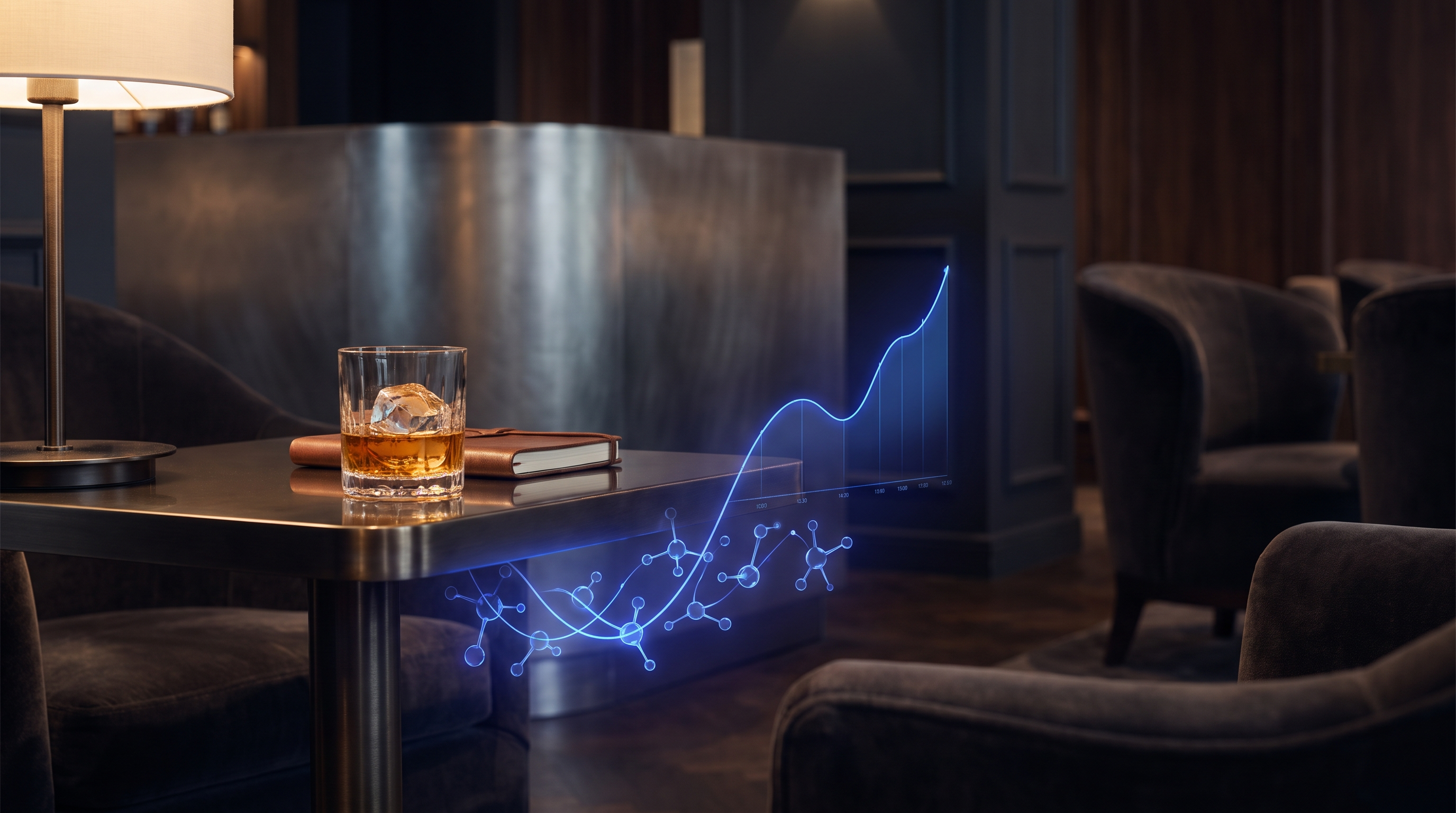
If absorption is still occurring faster than elimination, the concentration continues rising. Once absorption slows enough and elimination becomes dominant, the curve reaches its peak and begins to fall.

Drinking stops instantly. Absorption does not.
It helps to separate three different moments that are often treated as though they happen at the same time:
- the moment you take your last sip;
- the moment most of that alcohol has been absorbed;
- the moment your alcohol concentration reaches its peak.
Those moments can be separated by a meaningful amount of time.
Alcohol is absorbed through the gastrointestinal system, with the rate strongly influenced by how quickly stomach contents move onward through the digestive tract. Classic research on alcohol absorption and gastric emptying found that faster gastric emptying generally produces faster alcohol absorption, while slower gastric emptying delays absorption and changes both the timing and magnitude of the peak.
This makes the common mental model — “I stopped drinking, therefore my alcohol level must now be dropping” — unreliable.
When does alcohol usually peak?
There is no single universal time at which alcohol concentration peaks. The timing depends strongly on drinking conditions — especially whether alcohol is consumed on an empty stomach or with food.
Alcohol is generally absorbed faster in the fasting state. In a controlled crossover study published in Alcoholism: Clinical and Experimental Research, 15 healthy men consumed an equivalent ethanol dose as beer, white wine or vodka with tonic over 20 minutes after an overnight fast.
Even under these relatively fast-absorption conditions, the study on beverage type and peak blood alcohol concentration found that the average peak occurred approximately:
| Beverage in the study | Average time to peak |
|---|---|
| Vodka with tonic | 36 ± 10 minutes |
| White wine | 54 ± 14 minutes |
| Beer | 62 ± 23 minutes |
Importantly, those values should not be interpreted as typical timelines for a real evening. The participants had fasted overnight, a condition that generally favors faster alcohol absorption.
In real-life situations, people often drink while eating dinner, sharing snacks or over a longer period. Food in the stomach can slow gastric emptying and alcohol absorption, meaning the concentration-time curve may develop more gradually and the peak may occur later than it does under fasting laboratory conditions.
A separate crossover study by Jones and Jönsson compared alcohol consumption after an overnight fast with the same dose consumed immediately after breakfast. The fed condition produced a substantially lower blood-alcohol peak than the fasting condition, illustrating how strongly a meal can alter alcohol pharmacokinetics.
In that study, the mean peak concentration was approximately 104 mg/dL in the fasting condition compared with 67 mg/dL after breakfast. These numbers describe that specific controlled experiment rather than a universal effect, but they clearly demonstrate that eating can substantially modify the alcohol concentration curve.
For a typical dinner, party or long evening, absorption may therefore continue for longer than fasting experiments alone would suggest. This is one reason why the time since the last drink cannot reliably tell you whether alcohol concentration has already peaked.
What determines how quickly alcohol is absorbed?
Alcohol pharmacokinetics are more complicated than simply counting minutes since the final drink.
1. Food and gastric emptying
Food generally slows the movement of stomach contents into the small intestine, where alcohol can be absorbed rapidly. As a result, drinking with a meal often produces a slower rise and a lower peak concentration than consuming the same alcohol dose on an empty stomach.
This effect is closely connected to gastric emptying. Research examining gastric emptying and ethanol absorption has shown a strong relationship between how quickly the stomach empties and how rapidly alcohol appears in the bloodstream.
The Jones and Jönsson crossover experiment also showed markedly different blood-alcohol profiles when the same subjects consumed alcohol after breakfast rather than after an overnight fast.
This does not mean food “cancels” alcohol. It changes absorption kinetics; ethanol still has to be absorbed and processed by the body.
2. How quickly you drink
Consuming several drinks in a short period can deliver ethanol to the gastrointestinal system faster than the body can eliminate it.
This can produce a steep rising phase in which substantial absorption is still taking place after drinking stops.
The NIAAA specifically warns that consuming large amounts of alcohol rapidly can overwhelm the body's ability to clear it from the bloodstream and cause rapid increases in alcohol concentration.
3. The beverage
The amount of ethanol ultimately consumed matters most, but beverage composition can influence how quickly that ethanol is delivered and absorbed.
The beer, wine and spirits study described above found different peak concentrations and different times to peak despite administering the same ethanol dose per kilogram of body weight.
This is also why the question is more complicated than simply asking whether beer, wine or spirits are “stronger.” The dose of ethanol, concentration of the beverage, drinking speed and gastrointestinal conditions interact.
4. Individual physiology
Alcohol absorption and distribution vary between individuals. Body composition, biological differences, gastrointestinal physiology, medications, recent food intake and other factors can all contribute to different concentration-time curves.
Even the same person should not expect every evening to follow an identical timeline. Eating a large dinner on one occasion and drinking on a relatively empty stomach on another can produce noticeably different absorption profiles.
Why one alcohol measurement is only a snapshot
Imagine taking a measurement shortly after finishing your last drink.
The result describes what is detectable at that moment. But if ethanol is still being absorbed, a later measurement could potentially be higher. If the peak has already passed, a later measurement may instead be lower.
That means two measurements separated in time can legitimately differ without either measurement necessarily being contradictory.
This concept matters across alcohol-measurement technologies. Breath, blood and skin-related alcohol signals are connected to different physiological compartments and measurement principles, and their timing should not be treated as interchangeable.
For a deeper explanation of alcohol released through the skin, see our guide to transdermal alcohol detection and skin alcohol sensing.
Absorption versus elimination: the simplest way to understand the curve
A useful conceptual model is to think of alcohol concentration as a competition between input and output.
| Phase | What is happening |
|---|---|
| Rising phase | Alcohol is entering circulation faster than it is being eliminated. |
| Peak | The concentration reaches its maximum for that drinking episode. |
| Falling phase | Elimination exceeds the remaining rate of absorption. |
The important point is that your last sip can occur during the rising phase.
Finishing the drink does not tell you where you are on the curve.
And when alcohol is consumed with food, the absorption phase can be stretched over a longer period than under fasting conditions. The curve may rise more gradually, but that also means alcohol can still be entering the bloodstream well after drinking has stopped.

Why fasting studies can be misleading if taken out of context
Many controlled alcohol studies use fasting participants because this reduces some experimental variability and allows researchers to observe alcohol pharmacokinetics under standardized conditions.
But that does not necessarily reproduce what happens during a normal evening.
A person having wine with dinner, cocktails after a meal or drinks accompanied by snacks may absorb alcohol differently from a volunteer who has fasted overnight. Gastric contents can slow delivery of alcohol to the small intestine, changing both how rapidly concentration rises and when the maximum occurs.
This distinction matters when interpreting scientific numbers. A reported average time-to-peak from a fasting study should not automatically be presented as the expected peak time after a normal meal.
The more accurate conclusion is that peak timing is highly context-dependent — and that alcohol may still be rising after the last drink under both fasting and fed conditions.
Can coffee, water or a shower stop alcohol levels from rising?
They do not remove ethanol that is already being absorbed or circulating through the body.
Coffee may change how alert someone feels, water can help with hydration, and a shower may make someone feel different, but none of those actions instantly clears alcohol from the bloodstream.
If alcohol is still moving from the gastrointestinal tract into circulation, the concentration can continue rising regardless of whether the person feels more awake.
Subjective feelings are therefore a poor substitute for understanding what alcohol is actually doing in the body.
Where EthyloKey fits
EthyloKey approaches alcohol awareness differently from a traditional breathalyzer.
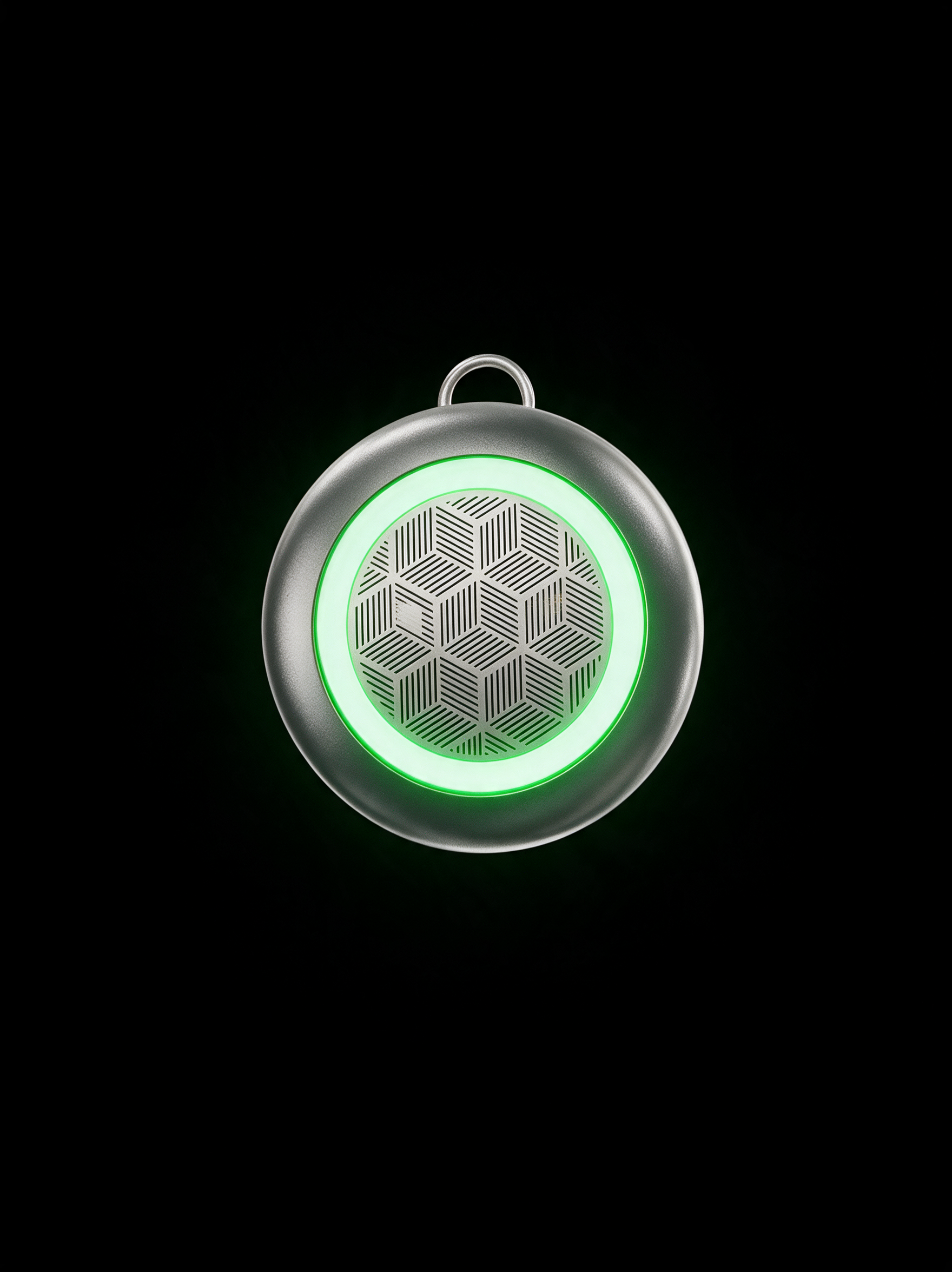
Instead of requiring the user to blow into a mouthpiece, EthyloKey is a reusable touch-based alcohol detector designed to provide a color-coded alcohol indication from skin contact in approximately 20–25 seconds.
It combines ethanol-related sensing with temperature and humidity information, which is interpreted by its proprietary classification system. The result is presented as an indicative green, orange or red range rather than an exact BAC value.

You can learn more about how EthyloKey's touch-based alcohol detection works.
The fact that alcohol levels can still be changing after the last drink is particularly important when interpreting any single measurement. EthyloKey provides an indication at the time of the test; it does not predict whether alcohol-related signals will rise or fall afterward.
This becomes especially relevant during real-life evenings where food may slow absorption. A person could finish drinking while alcohol is still being absorbed, meaning a later indication may differ from an earlier one.
That is why awareness over time is fundamentally different from trying to turn one reading into a prediction.
EthyloKey is a personal wellness and prevention device. Its results are indicative and are not legal or evidential alcohol measurements. A result should never be interpreted as confirmation that someone is safe or legally permitted to drive.
See the EthyloKey FAQ for more information about results, limitations and intended use.
Why this matters after a night out
One of the practical risks of delayed absorption is that someone may finish drinking, feel relatively stable and assume the physiological effect has already peaked.
That assumption can be wrong.
If someone has been drinking while eating, the absorption curve may be slower and more prolonged. Feeling unchanged shortly after the final drink therefore does not mean the concentration has necessarily started falling.
The issue becomes especially important after rapid or heavy drinking. The NIAAA warns that alcohol concentrations may continue rising even after a person becomes unconscious. Someone who cannot be awakened, is vomiting repeatedly, has seizures, has very slow or irregular breathing, or shows other signs of possible alcohol overdose requires urgent medical attention.
Do not leave an unconscious person alone to “sleep it off.”
Does your alcohol level immediately fall after your last drink?
No. Your alcohol level begins falling only when elimination exceeds ongoing absorption.
Because alcohol can remain in the stomach and intestine after drinking stops, concentration may continue increasing for a period of time. How long this happens depends on the circumstances rather than a universal fixed delay.
Can your alcohol level be higher 30 minutes after your last drink?
Yes, it can.
Controlled pharmacokinetic studies show that alcohol concentration may peak well after drinking has started or even after it has ended. Fasting generally accelerates absorption, while food can slow and prolong the absorption phase.
That means a person drinking over dinner or during a long evening may follow a different timeline from someone consuming the same ethanol dose after an overnight fast.
There is therefore no reliable universal “30-minute rule” that can predict an individual's alcohol concentration.
Does eating make alcohol disappear faster?
No.
Eating before or while drinking can slow alcohol absorption and often reduces the height of the peak compared with drinking on an empty stomach. It may also shift the timing of that peak.
But food does not neutralize ethanol or instantly increase its removal from the body. The alcohol that has been consumed still has to be absorbed and metabolized.
Can eating delay the alcohol peak?
Yes. Scientific studies show that consuming alcohol with food can substantially change the concentration-time profile compared with consuming it after fasting.
The effect varies depending on the meal and the individual, so there is no fixed amount of time that should be added to a fasting estimate. The important point is that real-world drinking after or during a meal can involve a longer absorption period than fasting laboratory experiments.
Can you predict when your alcohol level will start falling?
Not reliably from the time of your last drink alone.
The timing depends on how much alcohol was consumed, over what period, whether food was present, gastric emptying, beverage characteristics and individual physiology.
This is why generalized online calculators and rules of thumb should not be treated as individualized predictions or as a way to determine fitness to drive.
The bottom line
Your final sip marks the end of drinking, not necessarily the end of alcohol absorption.
Ethanol remaining in the gastrointestinal tract can continue entering the bloodstream afterward, meaning alcohol concentration can continue to rise before reaching its eventual peak.
Laboratory studies performed after overnight fasting often show relatively rapid absorption. But everyday drinking commonly happens with food, and meals can slow gastric emptying, reduce the peak concentration and prolong the absorption phase. For that reason, fasting-study peak times should not be treated as universal timelines for a dinner, party or night out.
Food, drinking speed, gastric emptying, beverage characteristics and individual physiology all influence what the alcohol concentration curve looks like.
The practical lesson is simple: a measurement is a snapshot of a changing physiological process.
If you want to explore a different approach to personal alcohol awareness, discover EthyloKey, the reusable touch-based alcohol detector designed to provide a simple indicative range through skin contact.
Sources
- National Institute on Alcohol Abuse and Alcoholism — Understanding the Dangers of Alcohol Overdose
- Mitchell MC Jr. et al. — Absorption and Peak Blood Alcohol Concentration After Drinking Beer, Wine, or Spirits
- Holt S. — Observations on the Relation Between Alcohol Absorption and the Rate of Gastric Emptying
- Jones AW, Jönsson KA — Food-Induced Lowering of Blood-Ethanol Profiles and Increased Rate of Elimination Immediately After a Meal
- Recent Advances in Alcohol Metabolism: From the Gut to the Brain
Share:
Can Oura Ring or WHOOP Track Alcohol?
Workplace Alcohol Awareness Programs: What Employers Can Actually Do