

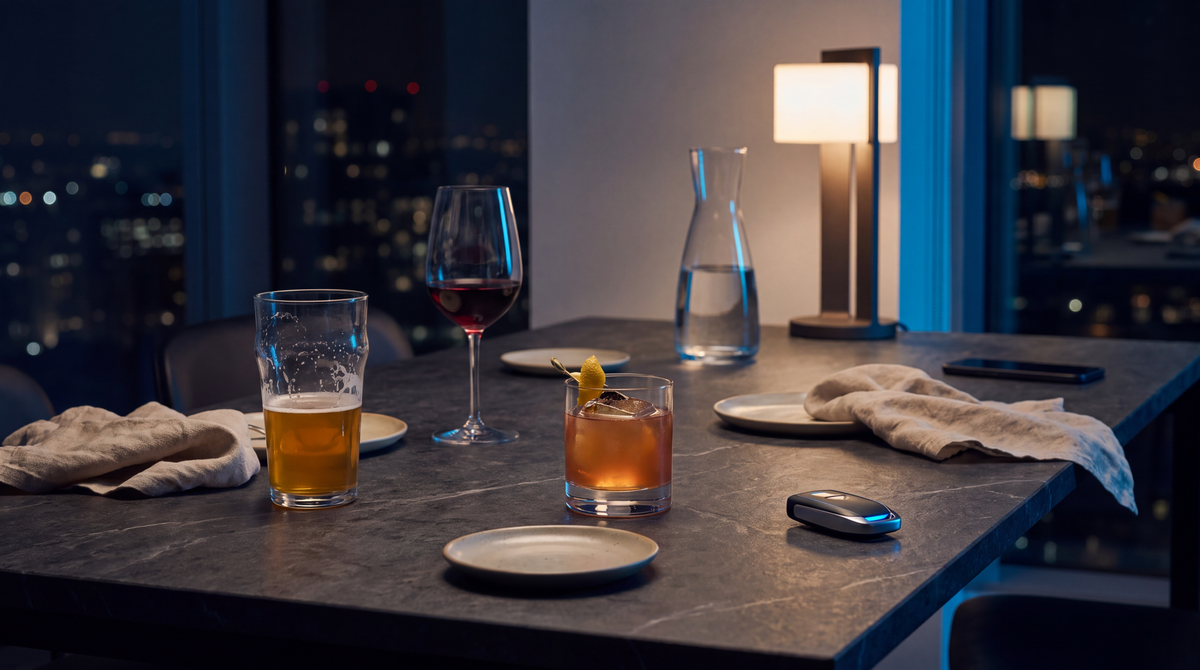
Mixing beer, wine and spirits does not create a special chemical effect that automatically makes you more intoxicated. What matters most is how much ethanol you consume, how quickly you consume it, how fast it is absorbed, and how your body distributes and metabolizes it.
In real life, however, switching between different drinks can make those factors harder to track. A cocktail may contain more than one standard drink, a shot can be consumed faster than a beer, and beverage composition can influence how quickly alcohol reaches the bloodstream.
So the “mixing” itself is not the main issue — the drinking pattern often is.
Key takeaways
- Mixing different types of alcoholic drinks is not, by itself, proven to create extra intoxication beyond the alcohol you consume.
- Total ethanol intake and drinking speed are major drivers of blood alcohol concentration and impairment.
- Different drinks can contain very different amounts of alcohol, even when the glasses look similar.
- Beverage type and composition can affect absorption speed, so equal amounts of ethanol do not always produce identical concentration curves.
- The order of beer and wine did not significantly change hangover severity in a randomized crossover trial.
- Some beverages contain more congeners than others, which may influence hangover severity, but that is different from becoming more intoxicated from “mixing.”
Does mixing different types of alcohol make you more drunk?
No — not automatically.
Ethanol is the intoxicating alcohol in beer, wine and spirits. Your body does not create a new, more powerful form of alcohol simply because you switch from one beverage category to another.
The National Institute on Alcohol Abuse and Alcoholism explains that how much and how fast someone drinks strongly influence how much alcohol enters the bloodstream and the degree of impairment. Alcohol can be absorbed faster than it is metabolized, so its concentration can continue to build when additional drinks are consumed before earlier alcohol has been cleared.
That means a night involving beer, wine and cocktails can absolutely lead to greater intoxication — but usually because the person consumed more ethanol, consumed it faster, or changed to stronger or less predictable servings.
| Question | What the evidence suggests |
|---|---|
| Does changing from beer to wine or spirits create a special “mixing” effect? | No established effect makes ethanol inherently more intoxicating just because beverage types are combined. |
| Can a mixed-drink night lead to higher alcohol exposure? | Yes. Serving size, alcohol concentration, drinking pace and total intake can change substantially. |
| Can beverage type affect absorption? | Yes. Controlled studies show that the same ethanol dose can produce different absorption and peak concentration patterns depending on the beverage. |
| Can beverage type affect a hangover? | Possibly. Total alcohol exposure is important, and congeners found in some beverages may also affect hangover severity. |
What actually determines how intoxicated you become?
The label on the bottle matters less than the ethanol dose and the way it reaches your bloodstream.
1. Total ethanol consumed
In the United States, one standard drink contains about 14 grams of pure alcohol. That is approximately the amount in:
- 12 fl oz of regular beer at about 5% alcohol by volume
- 5 fl oz of wine at about 12%
- 1.5 fl oz of distilled spirits at about 40%

These are reference servings, not a guarantee that every real-world drink equals one standard drink. A strong craft beer, a large wine pour or a generous cocktail can contain substantially more alcohol.
This is one reason “I only had three drinks” can be misleading: three drinks are not necessarily three standard drinks.
2. How quickly you drink
Drinking speed matters because alcohol can enter the bloodstream faster than the body metabolizes it.
If the rate of intake increases, alcohol can accumulate. Switching from slowly consumed beer to shots or spirit-heavy cocktails may therefore change the trajectory of an evening even if the number of glasses does not look dramatically different.
The important variable is not that a spirit followed a beer. It is that the amount of ethanol per serving — and the speed at which it was consumed — may have changed.
3. Food and gastric emptying
Food can slow alcohol absorption and reduce the peak concentration reached compared with drinking on an empty stomach.
Alcohol absorption is closely related to gastric emptying. Controlled research has shown that food and differences in gastric emptying can change the alcohol concentration-time curve.
This is also why two apparently similar evenings can produce different effects.
4. Beverage concentration and composition
Here is where the simple phrase “only total alcohol matters” needs some nuance.
A controlled crossover study published in 2014 gave 15 healthy fasting men the same ethanol dose as beer, wine or vodka with tonic. Peak blood alcohol concentration was highest after vodka and tonic, lower after wine and lowest after beer. The peak also occurred earlier after vodka and tonic.
That does not prove that mixing beverages makes someone more intoxicated. It shows that the form in which ethanol is consumed can influence absorption kinetics.

The practical takeaway is that drink type can matter indirectly — through concentration, volume, ingredients and drinking behavior — even though there is no special toxic reaction caused by changing categories.
5. Individual variation
People can respond differently to the same alcohol intake.
Body water, body size, biological factors, genetics, medications, food intake and individual metabolic differences can influence alcohol concentration and effects.
This is another reason rules based only on the number or type of drinks are unreliable for predicting an individual result.
What about “beer before liquor, never been sicker”?
Rhymes are memorable. They are not necessarily physiology.
One of the best-known controlled tests of beverage order was a randomized crossover trial published in The American Journal of Clinical Nutrition in 2019.
Ninety adults were assigned to drink beer followed by wine, wine followed by beer, or one beverage type as a control. On a later test day, the order was reversed.
The researchers found that neither the type nor the order of beer and wine significantly affected hangover severity.
In other words, “beer before wine” did not protect participants, and reversing the order did not reliably make the next morning worse.
The study did find that perceived drunkenness and vomiting were among the strongest predictors of hangover severity. That points back toward the overall drinking experience rather than a simple sequencing rule.
The trial tested beer and wine, so it should not be stretched into a claim that every possible beverage combination has been experimentally compared.
But it provides strong evidence against the idea that beverage order alone is a reliable hangover strategy.
Why does mixing drinks sometimes feel worse?
There are several plausible reasons — without needing a special “mixing alcohol” mechanism.
You may lose track of standard drinks
A bottle of beer can be relatively easy to count. A night that moves from wine to cocktails to shots is much harder to estimate.
Cocktails are especially variable because recipes and pours differ. The visual unit — one glass — is not the same thing as the physiological unit — the amount of ethanol.
NIAAA notes that people can underestimate alcohol consumption because drink sizes and alcohol-by-volume vary, and customary servings do not necessarily equal one standard drink.
Your drinking pace may change
Different beverages encourage different drinking behaviors.
A shot can be consumed in seconds. A cocktail may be stronger than expected. A new round may arrive before the previous drink has been fully absorbed.
The result can be a faster increase in alcohol exposure, even though the person remembers only “switching drinks.”
The stronger part of the evening may come later
A person may start with lower-alcohol drinks and move to spirits later.
If alcohol from earlier drinks is still being absorbed while additional ethanol is consumed, alcohol concentration can continue rising.
This can create the impression that the switch itself caused a sudden effect.
Other compounds can influence how you feel
Alcoholic beverages contain compounds other than ethanol, commonly called congeners. Their concentrations vary by beverage and production method.
In a controlled study involving 95 young adults, participants reported worse hangovers after bourbon than after vodka when drinking sessions were designed to reach similar breath alcohol concentrations.
The researchers found an effect of beverage congeners on hangover severity, but not on measured next-day cognitive impairment.
A broader review of hangover biology also identifies alcohol metabolites, inflammatory processes, neurotransmitter changes and ingested congeners among the mechanisms under investigation.
So beverage choice can influence next-day symptoms.
But a worse hangover is not proof that “mixing” created a higher alcohol concentration.
Does mixing alcohol cause worse hangovers?
There is no strong evidence that simply combining beverage categories is the decisive factor.
Hangovers are complex. The amount of alcohol consumed is important, and research also points to sleep disruption, alcohol metabolism, inflammation, oxidative stress and beverage congeners.
The 2019 beer-and-wine crossover trial is especially useful because it directly tested a common mixing myth: changing the order did not significantly change hangover severity.
A more accurate way to think about it is:
- More ethanol can mean greater alcohol exposure and potentially more severe next-day effects.
- Some beverages may produce different hangover experiences because of their non-ethanol compounds.
- Mixing drinks can make it easier to underestimate how much alcohol you have actually consumed.
- The sequence alone is not a dependable predictor.
Is mixing alcohol with energy drinks different?
Yes. This is a different question from mixing beer, wine and spirits.
Energy drinks introduce caffeine and other stimulatory ingredients.
Caffeine does not remove alcohol from the bloodstream or speed up ethanol metabolism. Feeling more alert is not the same thing as having metabolized the alcohol faster.
For that reason, alcohol mixed with energy drinks should not be treated as evidence for the general claim that mixing different alcoholic beverages creates a special intoxication effect.
A better way to think about a night of drinking
Instead of asking “Did I mix drinks?”, ask questions that better reflect alcohol exposure:
- How much pure ethanol was in each serving?
- How quickly were the drinks consumed?
- Were the pours standard or unusually large?
- Was food consumed before or during drinking?
- Could alcohol still be absorbing from earlier drinks?
- Has the type or strength of drink changed enough to make tracking harder?
This framework is more useful than relying on drink-order folklore.
It is also important to remember that subjective feelings are imperfect. Feeling normal, awake or coordinated is not a precise measurement of alcohol in the body.
Where EthyloKey fits

EthyloKey approaches alcohol awareness from a different direction.
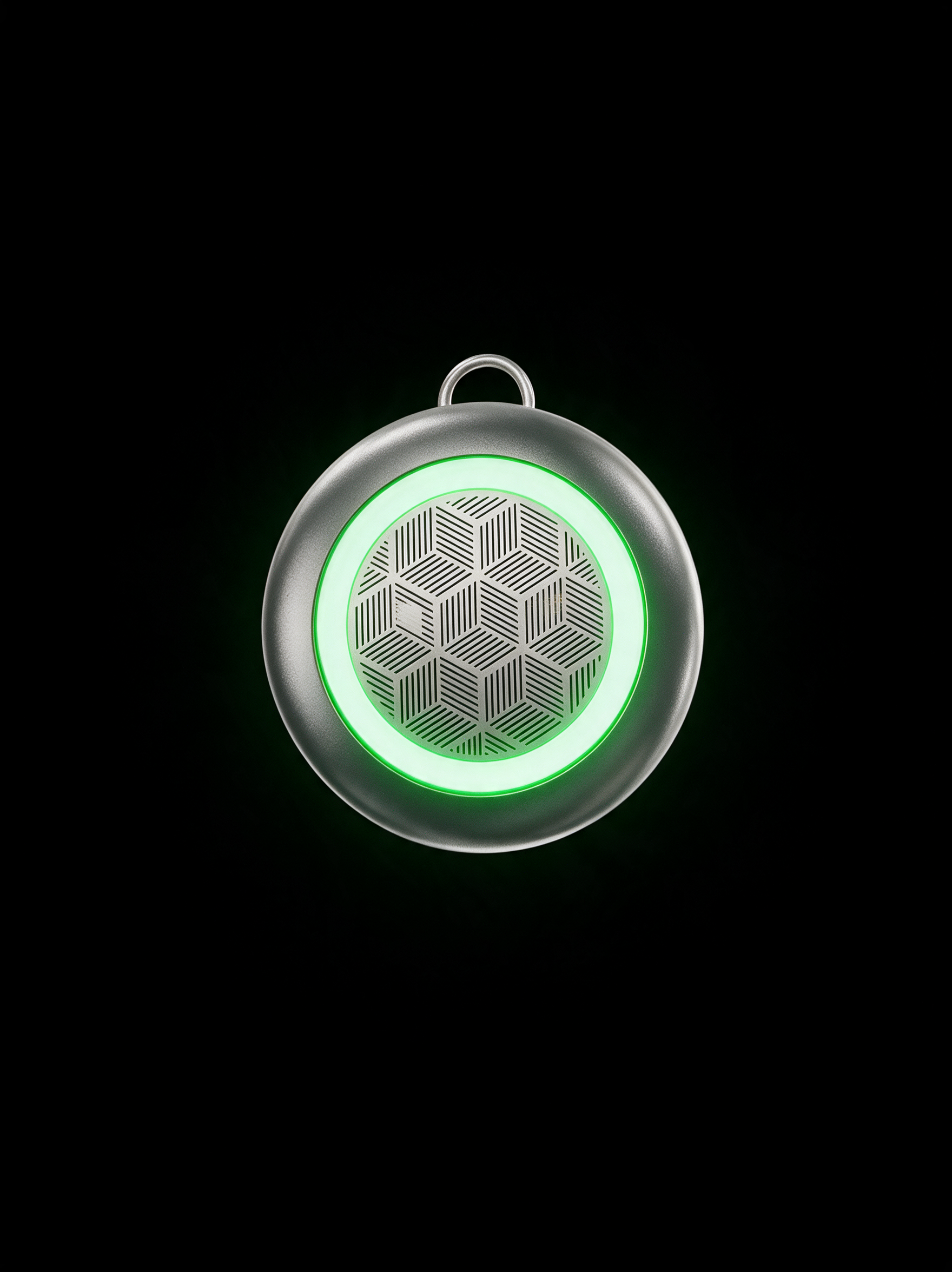
Instead of asking someone to estimate their situation from the number or type of drinks consumed, EthyloKey is a touch-based alcohol detector that detects ethanol released through the skin.
It also measures temperature and humidity, and its proprietary classification model interprets those signals to provide a color-coded green, orange or red indicative alcohol range.
A typical test takes approximately 20–25 seconds and does not require blowing or a disposable mouthpiece.
This provides another way to observe an alcohol indication at a particular moment, including as that indication changes over time.
EthyloKey does not provide an exact BAC value and is not a legal or evidential alcohol test. It should not be used to determine whether someone is safe or legally permitted to drive.
Learn how touch-based alcohol detection works.
You can also explore EthyloKey or read the EthyloKey FAQ.
Frequently asked questions
Is it bad to mix beer and liquor?
Mixing beer and liquor is not known to create a special chemical reaction that automatically increases intoxication.
The bigger concerns are total ethanol intake, drinking speed, serving size and how the change in beverage affects your consumption pattern.
Does switching from beer to liquor make you drunk faster?
It can change how quickly alcohol exposure rises if the new drinks contain more ethanol per serving or are consumed faster.
Controlled research also suggests beverage concentration and composition can influence absorption.
That is different from saying the act of switching itself makes alcohol more potent.
Is “liquor before beer, you’re in the clear” true?
There is no reliable scientific rule that makes beverage order a protection against intoxication or hangover.
A randomized trial of beer and wine found no significant hangover advantage from one order versus the other.
Can different types of alcohol cause different hangovers?
Possibly.
Beverage congeners vary, and controlled research has found worse hangover symptoms with high-congener bourbon than with vodka under matched intoxication conditions.
That does not mean mixing itself is responsible.
Does eating before drinking matter?
Yes.
Food can slow alcohol absorption and reduce the peak alcohol concentration compared with drinking on an empty stomach. It does not cancel the alcohol consumed.
Can you tell how intoxicated you are by how you feel?
Not precisely.
How someone feels is subjective and can be influenced by fatigue, context, caffeine and other factors. Feeling alert should not be interpreted as proof that alcohol has been metabolized or impairment is absent.
The bottom line
Mixing beer, wine and spirits does not automatically make you more intoxicated simply because different beverage types are combined.
What matters most is the amount of ethanol consumed, the pace of drinking, absorption and individual physiology.
Switching drinks can still matter in practice because it can change serving size, alcohol concentration, drinking speed and your ability to track total intake. Beverage composition can also influence absorption and hangover severity.
So forget the rhyme and focus on the variables that actually matter: how much alcohol is consumed, how fast it is consumed, and how alcohol changes in the body over time.
Sources
- National Institute on Alcohol Abuse and Alcoholism — The Basics: Defining How Much Alcohol Is Too Much
- National Institute on Alcohol Abuse and Alcoholism — What Is a Standard Drink?
- Köchling J, Geis B, Wirth S, Hensel KO — Grape or grain but never the twain? A randomized controlled crossover trial of beer and wine
- Absorption and peak blood alcohol concentration after drinking beer, wine, or spirits
- Rohsenow DJ et al. — Intoxication with bourbon versus vodka: effects on hangover, sleep, and next-day neurocognitive performance
- Alcohol Hangover: Underlying Biochemical, Inflammatory and Neurochemical Mechanisms
Share:
What Is Transdermal Alcohol Detection?