

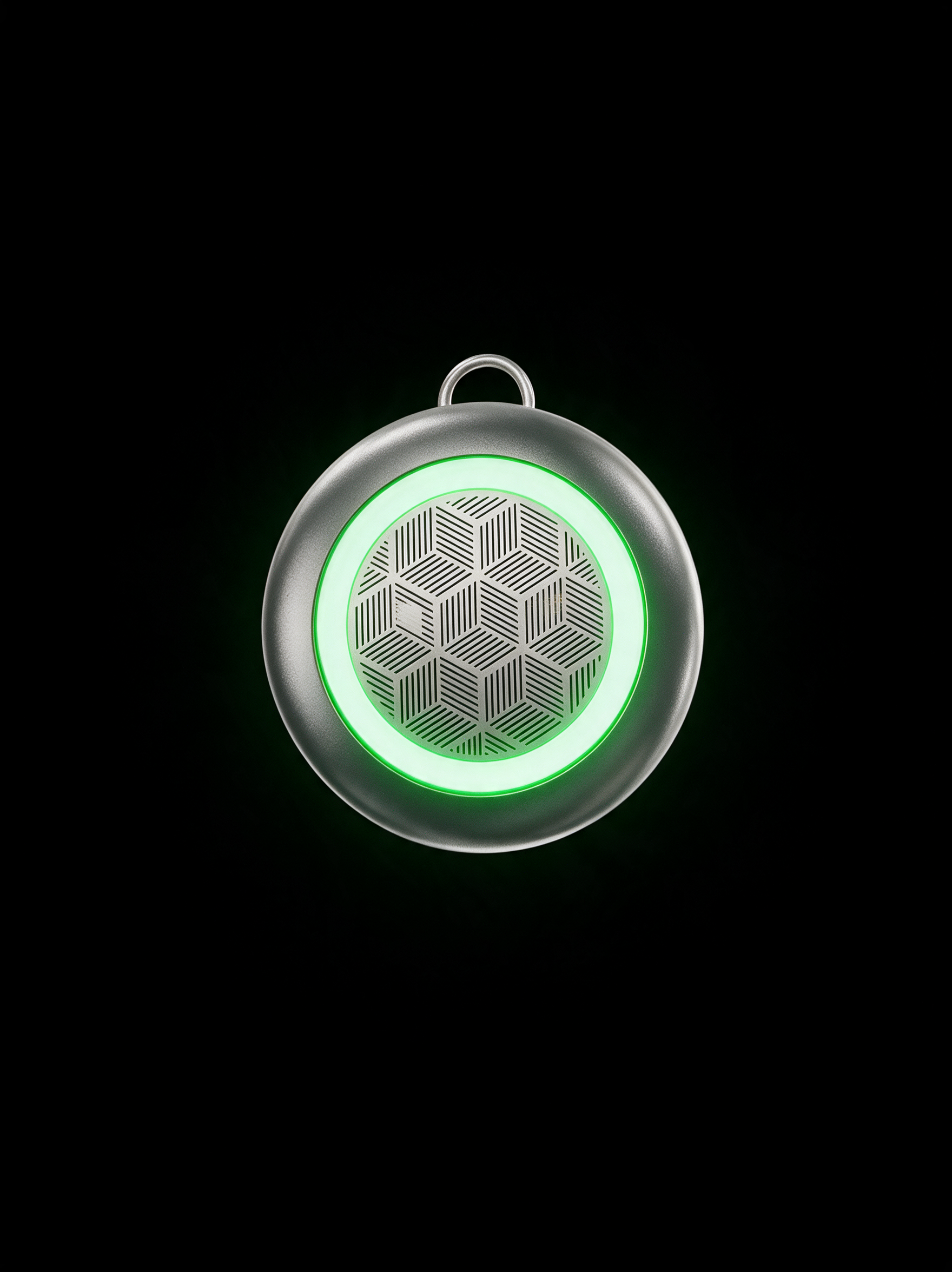
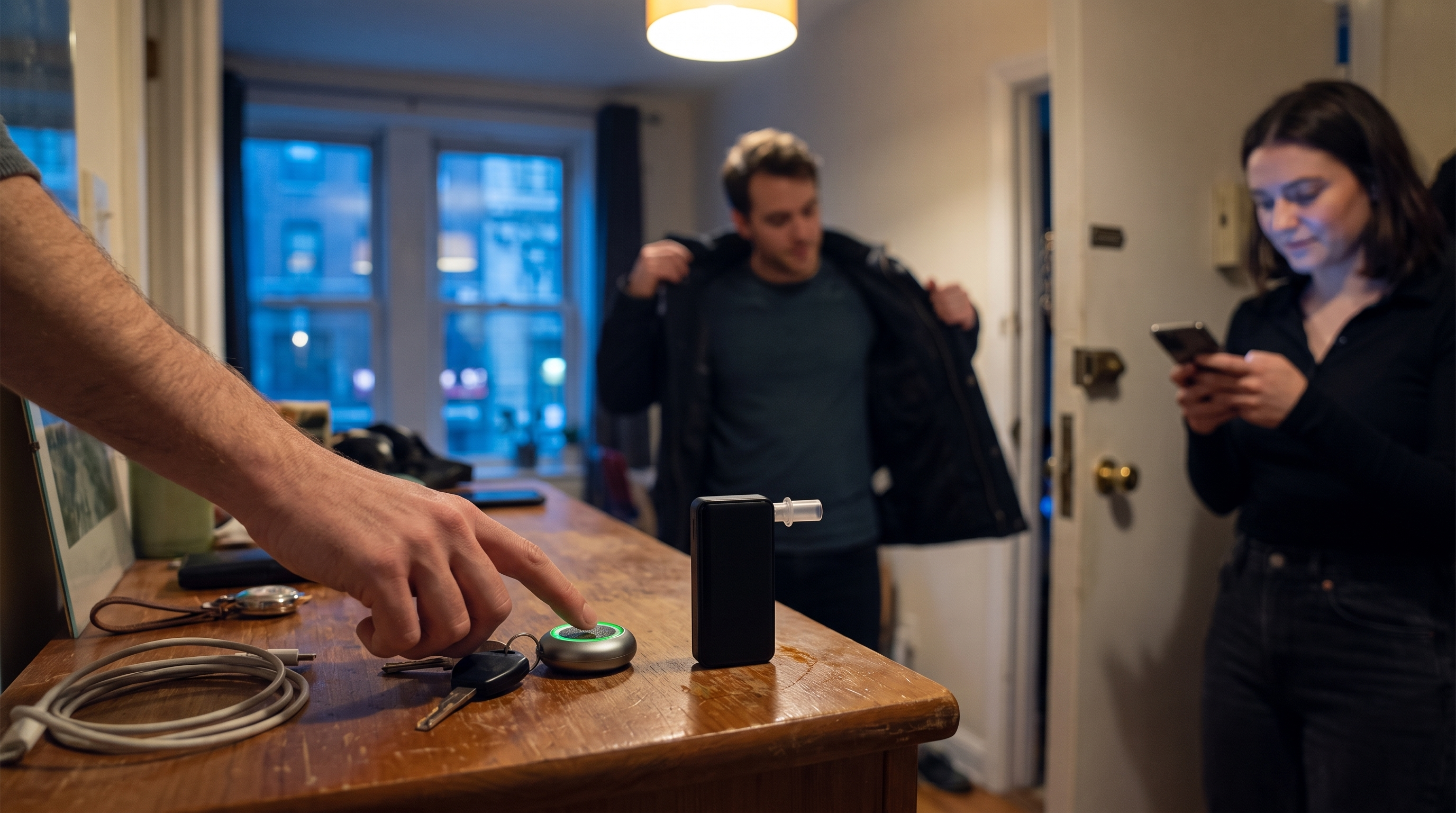
EthyloKey and a traditional breathalyzer are not two versions of the same technology. A breathalyzer analyzes alcohol in exhaled breath and typically provides a numerical breath-alcohol or estimated BAC result. EthyloKey instead detects ethanol released through the skin during fingertip contact and classifies the reading into an indicative green, orange or red range.
The practical difference is just as important: one requires a breath sample; the other requires a touch. That changes the result you receive, the way the device is shared, its maintenance model and the situations in which each approach makes the most sense.
 Editorial disclosure: This comparison is published by EthyloKey. The goal is to explain the differences between technologies and intended uses, not to suggest that a personal wellness device replaces professional, evidential or legally certified alcohol testing.
EthyloKey vs breathalyzer: the quick answer
| Feature | Traditional personal breathalyzer | EthyloKey |
|---|---|---|
| What it detects | Alcohol in exhaled breath | Ethanol released through the skin |
| How you test | Blow into or toward the device | Place a fingertip on the sensor |
| Typical result | Numerical BrAC / estimated BAC | Indicative green, orange or red range |
| Mouthpiece | Common on personal and professional devices, although some systems also offer passive or funnel modes | None |
| Testing consumables | Depends on the model and how mouthpieces are managed | No disposable testing consumables |
| Periodic calibration | Commonly required or recommended depending on the device | No periodic laboratory recalibration for normal use |
| Sharing | Often involves changing or cleaning mouthpieces | Designed to be shareable without mouthpieces |
| Typical interaction | Active breath sample | Intentional skin-contact test |
| Exact BAC displayed? | Many personal breathalyzers estimate BAC numerically | No |
| Legal / evidential use | Only specific approved devices and procedures qualify | No — personal wellness and prevention device |
The simplest way to think about the difference: a breathalyzer is designed around obtaining and analyzing a breath sample. EthyloKey is designed around making an alcohol-awareness check possible through a fingertip touch.

What does a breathalyzer actually measure?
A breathalyzer measures alcohol present in exhaled air. Alcohol circulating in the bloodstream exchanges with air in the lungs, allowing a breath-testing device to analyze an adequate breath sample and determine a breath alcohol concentration.
The National Highway Traffic Safety Administration describes law-enforcement breath alcohol devices as instruments that measure a driver's breath alcohol concentration, or BrAC. Professional systems can display a numerical concentration and, depending on the device, regulatory approval and testing procedure, may serve screening or evidential purposes.
That last distinction matters: “breathalyzer” does not automatically mean “legal evidence.” Consumer breathalyzers, roadside screening devices and approved evidential breath-testing instruments can all use breath, but they do not necessarily have the same certification, accuracy requirements or intended use.
What does EthyloKey measure instead?
EthyloKey takes a different physiological route.
After ethanol enters the bloodstream, a fraction can reach the skin surface through perspiration and skin vapor. Peer-reviewed research has repeatedly demonstrated that alcohol-related signals can be detected transdermally and that these signals are associated with blood and breath alcohol measurements.
A 2022 meta-analysis of transdermal alcohol biosensors found a strong overall association between transdermal alcohol measurements and blood or breath measurements, while also showing that measurement location significantly affects timing.
EthyloKey applies this principle as an on-demand fingertip interaction rather than as a continuously worn alcohol monitor. The device detects ethanol released through the skin while also measuring temperature and humidity. Its proprietary classification model combines these signals to provide an indicative green, orange or red alcohol range.
A typical EthyloKey measurement takes approximately 20–25 seconds.
For a deeper explanation of the underlying science, see our guide to transdermal alcohol detection and skin alcohol sensing.
The biggest difference is not the sensor. It is the interaction.
Traditional breath testing asks the user to produce a controlled breath sample. Touch-based detection changes that interaction entirely.
With EthyloKey, there is nothing to blow into. The user places a finger on the sensor and waits for the measurement.
That may sound like a small usability difference, but it changes several aspects of everyday use.
- There is no mouthpiece to insert before testing.
- There are no disposable testing consumables.
- The same device can be shared without exchanging mouthpieces.
- The device can remain attached to a keychain rather than being treated as dedicated testing equipment.
- Testing can be performed without asking someone to produce a breath sample.
Traditional breath testing has its own advantage: when the objective is a numerical breath-alcohol measurement, obtaining a controlled breath sample is precisely what the technology is designed to do.
The question is therefore less “Which technology is universally better?” and more “What kind of information and interaction do you actually want?”
Why do breathalyzers use mouthpieces?
Many breathalyzers use a mouthpiece to help collect a consistent sample of exhaled air. Professional testing procedures can be highly controlled because the quality and timing of that sample affect the result.
For example, U.S. Department of Transportation confirmation procedures require an individually wrapped mouthpiece and instruct the person being tested to blow steadily and forcefully until an adequate breath sample has been obtained.
The same regulations also require a waiting period before a confirmation test to reduce the possibility that residual mouth alcohol artificially raises the reading. The DOT specifies at least a 15-minute waiting period for regulated confirmation testing and explains that the person should not eat, drink, smoke, put anything in their mouth or belch during that time.
Those are professional regulatory procedures, not instructions for every consumer breathalyzer. They illustrate an important point, however: breath testing is built around obtaining and controlling a breath sample.
EthyloKey does not collect a breath sample at all, so mouthpieces and breath-sampling procedures are not part of its measurement process.
Numeric BAC vs green, orange and red: which result is better?
Neither output is inherently better. They answer different questions.
A personal breathalyzer is typically designed for users who want a numerical alcohol estimate. Depending on the device and market, this may be displayed as a BAC estimate or breath alcohol concentration.
EthyloKey deliberately uses a different result format.
It does not display an exact BAC number. Instead, it classifies a measurement into an indicative alcohol range:
- Green — lower range
- Orange — elevated range
- Red — higher range
The purpose is to turn the underlying sensor information into a simple personal-awareness indication rather than present the device as a legal-grade BAC instrument.
This distinction is especially important because blood alcohol, breath alcohol and transdermal alcohol are connected but are not identical measurement domains.
Do breathalyzers need calibration?
Many do.
Calibration requirements vary significantly according to sensor technology, manufacturer and intended use, so there is no universal interval that applies to every breathalyzer.
Current professional products illustrate that variation. Dräger states that its Alcotest 7000 has a recommended 12-month calibration interval, while noting that many alcohol-testing devices use shorter intervals. BACtrack likewise offers a dedicated periodic calibration service for its personal breathalyzers.
This maintenance exists because breathalyzer sensors and measurement systems must remain within their expected response over time.
EthyloKey uses a different maintenance model. It is designed for normal use without periodic laboratory recalibration.
That does not mean either approach is inherently more accurate. It means the technologies are engineered and maintained differently.
Which is easier to share?
This is one of the areas where the interaction model becomes especially noticeable.
A breathalyzer may absolutely be shared, but devices that use mouthpieces require users to manage hygiene appropriately. Manufacturers commonly sell replacement, washable or individually packaged mouthpieces for this purpose.
EthyloKey has no mouthpiece. This removes one layer of friction when a device is passed between friends, relatives or colleagues.
For an alcohol-awareness product designed to stay on a keychain, that difference can matter because the most useful device is often the one people are actually willing to carry and use.

Is EthyloKey more accurate than a breathalyzer?
That is not a scientifically useful apples-to-apples comparison because the two technologies provide different outputs.
A breathalyzer is generally evaluated on how accurately it measures or estimates alcohol concentration from breath.
EthyloKey is a classification system: it interprets skin ethanol, temperature and humidity signals and assigns the result to an indicative range.
In EthyloKey's internal controlled volunteer validation, classifications were benchmarked against police-grade breath testing. The internal results recorded approximately 5% false positives and 3% false negatives under those controlled conditions.
These are internal development and validation figures. They are not legal certification, are not a claim of 100% accuracy and should not be interpreted as a direct accuracy ranking against every breathalyzer on the market.
A professional evidential breath-testing instrument and a personal touch-based awareness device are solving different measurement problems.
Can EthyloKey replace a breathalyzer?
Sometimes it can be an alternative to the interaction of a personal breathalyzer, but it is not a replacement for every use of breath testing.
If your priority is:
- no blowing;
- no mouthpieces;
- a reusable device;
- easy sharing;
- no periodic laboratory recalibration for normal use;
- an intentional alcohol-awareness check from a device small enough to stay on your keys;
then touch-based alcohol detection offers a genuinely different option.
If your priority is an exact numerical breath-alcohol reading, EthyloKey is not designed to provide that.
If your use case requires police, workplace, forensic, evidential or legally recognized testing, you need the appropriate approved technology and procedure for your jurisdiction. NHTSA, for example, maintains specific conforming product lists for alcohol-testing devices.
EthyloKey does not replace those systems.
Who is EthyloKey designed for?
EthyloKey is designed around a very specific idea: make personal alcohol awareness easy enough to become part of everyday life.
It is compact, reusable, Qi rechargeable and designed to live on a keychain. A user can perform a test directly on the device without needing the connected app to see the green, orange or red indication.
That makes it particularly relevant for people who like the idea of having an alcohol-awareness device with them but do not want the traditional breathalyzer interaction.
You can see the complete interaction on How EthyloKey Works or explore EthyloKey.
Which should you choose: EthyloKey or a breathalyzer?
| If you mainly want... | Approach to consider |
|---|---|
| A numerical personal breath-alcohol estimate | A suitable personal breathalyzer |
| A touch-based alcohol indication without blowing | EthyloKey |
| No mouthpieces | EthyloKey |
| A device designed to remain on a keychain | EthyloKey |
| Professional or evidential breath testing | An approved professional / evidential breath-testing device |
| A simple green / orange / red awareness result | EthyloKey |
| An exact BAC number from EthyloKey | Neither — EthyloKey does not provide exact BAC |
There is no universal winner because the technologies optimize for different jobs.
Breathalyzers turned exhaled breath into a practical way to estimate alcohol concentration. Touch-based detection introduces another interaction model: intentional alcohol awareness through skin contact.
Frequently asked questions
Is EthyloKey a breathalyzer?
No. A breathalyzer detects alcohol through an exhaled breath sample. EthyloKey detects ethanol released through the skin during fingertip contact.
Does EthyloKey measure BAC?
No. EthyloKey does not display an exact blood alcohol concentration. It provides an indicative green, orange or red alcohol range.
Can alcohol really be detected through the skin?
Yes. Peer-reviewed research has demonstrated for decades that ethanol can be detected at the skin surface after alcohol consumption. Transdermal alcohol measurements have also shown meaningful relationships with blood and breath alcohol measurements.
Does EthyloKey require you to blow?
No. Testing is performed through skin contact by placing a fingertip on the sensor.
Does EthyloKey use mouthpieces?
No. EthyloKey does not require a mouthpiece.
Do personal breathalyzers require calibration?
Many do, although the required interval depends on the manufacturer, sensor technology and product. Always follow the instructions for the specific device.
Does EthyloKey require periodic laboratory recalibration?
No periodic laboratory recalibration is required for normal use.
Is a professional breathalyzer the same as a consumer breathalyzer?
No. Professional, screening and evidential breath-testing devices may be subject to specific performance standards, certifications and testing procedures. A consumer breathalyzer should not automatically be assumed to have evidential status.
What is a breathalyzer alternative without blowing?
Touch-based alcohol detection is one alternative. Instead of collecting exhaled air, a device such as EthyloKey detects an alcohol-related signal through skin contact. The result type and intended use differ from a traditional breathalyzer, so it should not be viewed as an identical replacement.
Can EthyloKey tell me whether I am safe to drive?
No. EthyloKey is a personal wellness and prevention device providing an indicative alcohol range. It does not determine fitness to drive and does not provide legal clearance. Alcohol levels can also continue changing after a measurement. Always follow local laws and never drive if in doubt.
For more on why measurements can change over time, read Why Can Alcohol Levels Rise After Your Last Drink?
The bottom line
EthyloKey and breathalyzers detect alcohol through two different physiological pathways and are designed around two different user experiences.
A traditional breathalyzer analyzes exhaled breath and typically provides a numerical concentration. EthyloKey uses fingertip contact to detect ethanol released through the skin and provides an indicative green, orange or red range.
For users who specifically want a number, breath testing remains the more appropriate approach.
For users looking for a reusable alcohol-awareness device without blowing, mouthpieces or periodic laboratory recalibration, touch-based detection creates a new alternative.
The important question is therefore not simply “EthyloKey or breathalyzer?”
It is: what do you want the device to measure, what result do you want to receive, and how do you want to interact with it?
Explore EthyloKey — the touch-based alcohol detector.
Sources
- National Highway Traffic Safety Administration — Alcohol Measurement Devices
- NHTSA — Alcohol Measurement Devices and Breath Alcohol Concentration
- U.S. Department of Transportation — 49 CFR Part 40 §40.251
- U.S. Department of Transportation — Breath Alcohol Confirmation Test Procedures
- Addiction — Validating Transdermal Alcohol Biosensors: Meta-analysis
- JMIR — Accuracy of Wearable Transdermal Alcohol Sensors: Systematic Review
- Dräger — Alcotest 7000 specifications and calibration interval
Share:
Workplace Alcohol Awareness Programs: What Employers Can Actually Do
How Does Fingertip Alcohol Detection Work?